Saint Clare of Assisi
The village owes its name to the 13th-century Italian saint who founded the Poor Clares, was canonized only two years after her death and has been, since 1958, the official patron saint of television. This is her story, and that of the church the village dedicated to her.
A Life of Voluntary Poverty
From Assisi, 1194, to the world
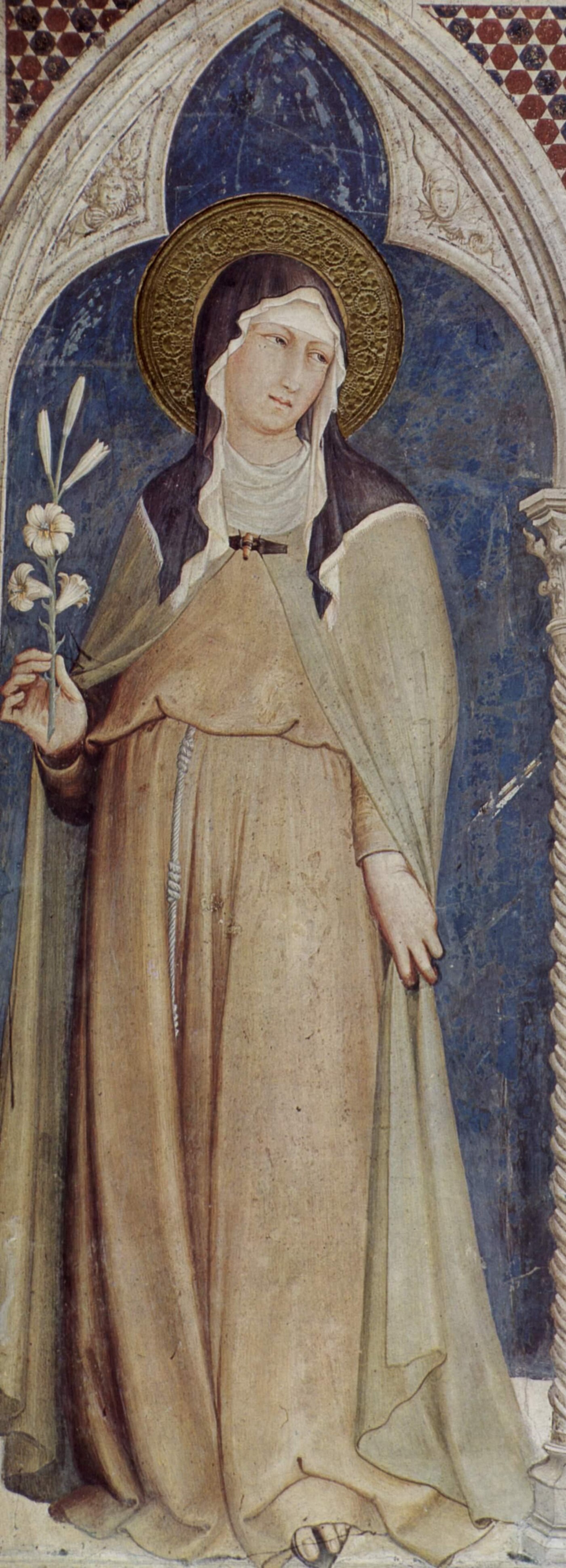
Clare was born on 16 July 1194 in Assisi, Italy. At the age of 18 she left her family home to follow Francis of Assisi and his ideal of evangelical poverty, a radical decision for a young woman of her time.
Beside the small church of San Damiano, on the outskirts of Assisi, she founded the female order that would become known as the Poor Clares (the Order of Saint Clare), devoted to prayer, enclosure and voluntary poverty. She lived there until her death on 11 August 1253.
Her reputation for holiness was such that she was canonized only two years after her death: on 23 August 1255, by Pope Alexander IV, at Anagni. Few saints in the history of the Church were raised to the altars so quickly.
| Born | 16 July 1194, Assisi (Italy) |
| Died | 11 August 1253, San Damiano, Assisi |
| Order founded | Poor Clares (Order of Saint Clare), at San Damiano |
| Canonized | 23 August 1255, by Pope Alexander IV, at Anagni |
| Patronages | Patron saint of television (1958) and of the parish of Santa Clara-a-Nova |
The Patron Saint of Television
A 13th-century saint and a 20th-century medium
On 14 February 1958, Pope Pius XII proclaimed Saint Clare the official patron saint of television. The choice rests on an old account: near the end of her life, ill and unable to leave her cell, Clare is said to have watched Mass projected on the wall of her room, as if seeing it from afar.
Seven centuries later, the Church saw in that episode the perfect image for the new medium that carried pictures across distances into people's homes. For a village bearing her name, with a website of its own, she is a particularly well-chosen patron.
Why 12 August?
The village feast and the old calendar
In the current liturgical calendar, Saint Clare's feast is celebrated on 11 August, the day of her death. But it was not always so: before the 1970 calendar reform, the feast fell on 12 August.
The Festa de Santa Clara, which the village celebrates on 12 August, preserves that older date. Local tradition kept the calendar the Church itself later changed, and it is on that day that the village honours its patron saint.
The Cult of Saint Clare in Portugal
From Poor Clare convents to the village name
The cult of Saint Clare reached Portugal through the convents of the Poor Clares, founded between the 13th and 17th centuries in places such as Coimbra, Santarém and Vila do Conde. The devotion spread across the country and left its mark on place names.
It was in that context that names like Santa Clara-a-Nova and Santa Clara-a-Velha were born. The "a-Nova" (the New) distinguishes this village from its older namesake, in the neighbouring municipality of Odemira, whose church is dedicated to the same saint.
The Parish Church
Church of Saint Clare of Assisi, at Largo da Igreja
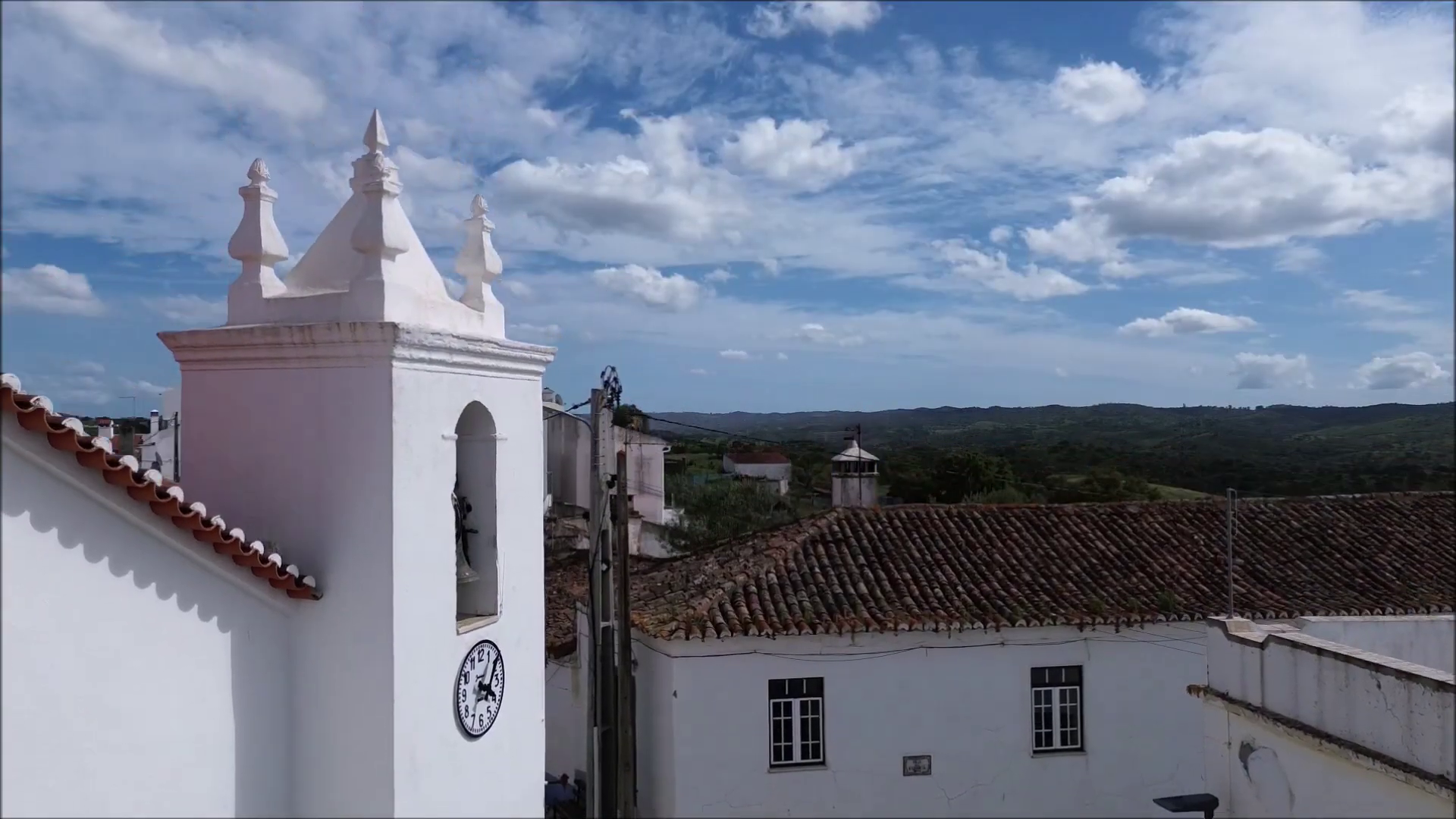
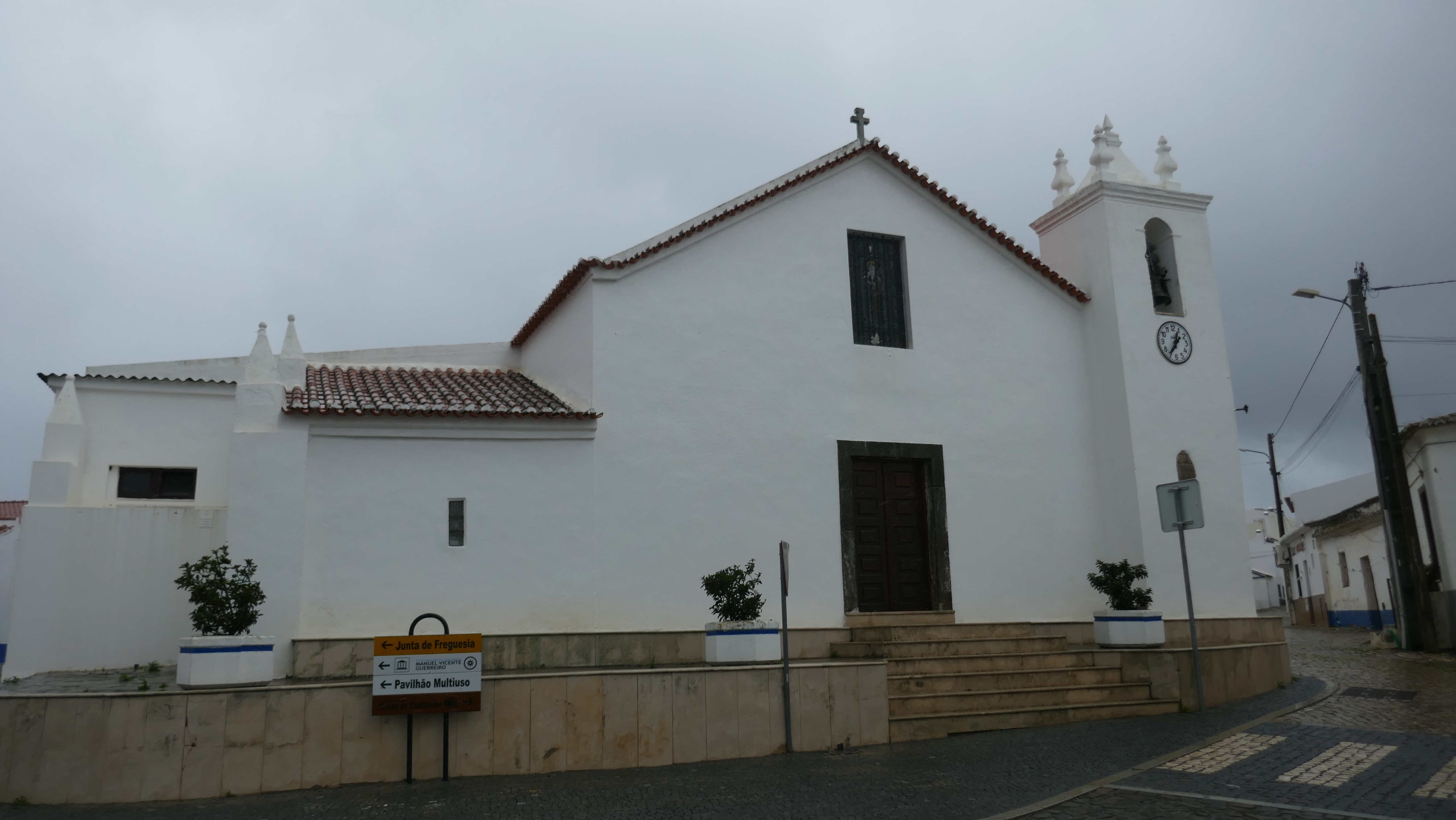
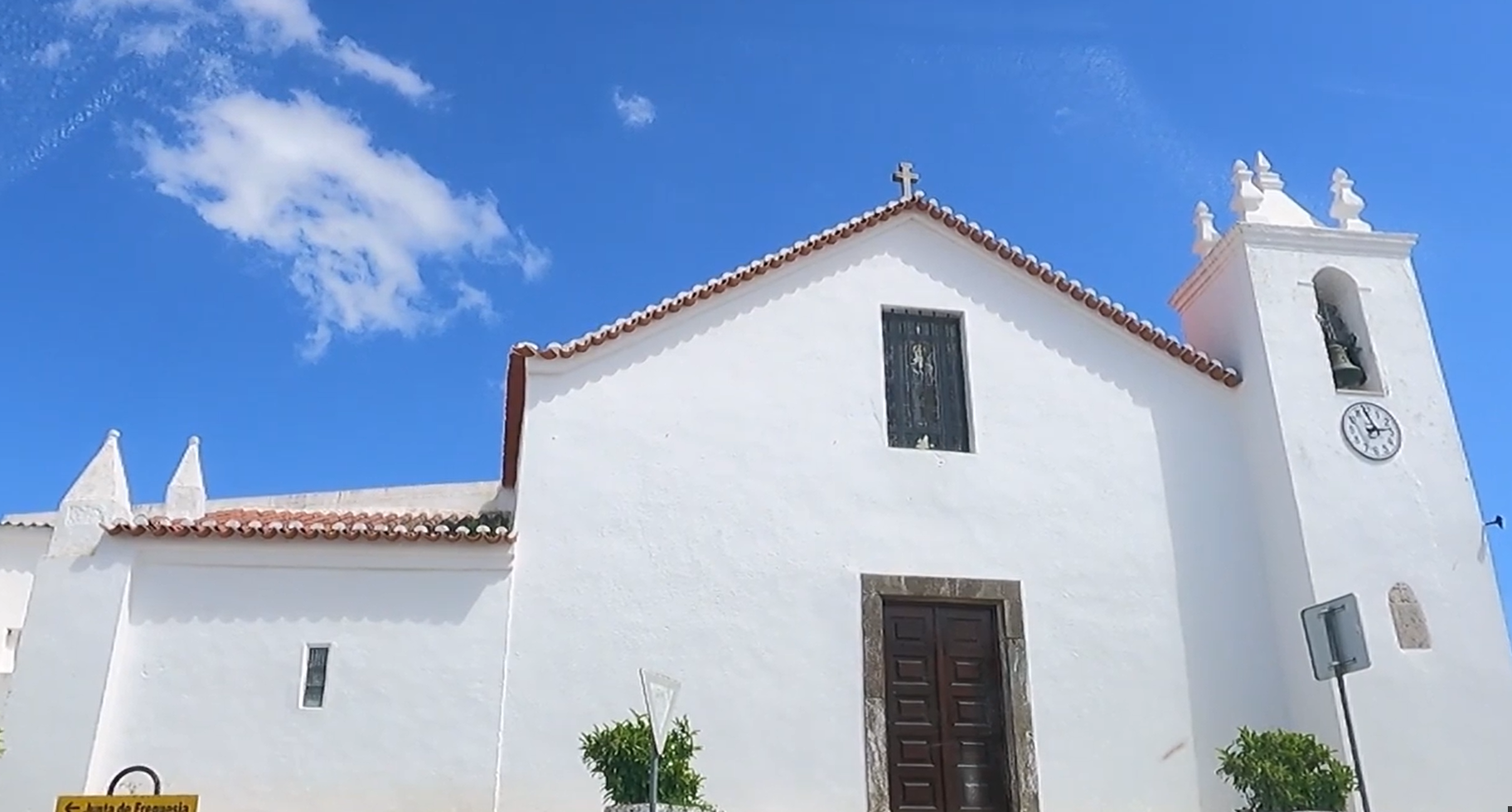
The parish church of Santa Clara-a-Nova, also known as the Church of Saint Clare of Assisi (Igreja de Santa Clara de Assis), stands at Largo da Igreja, in the centre of the village. It was probably built between the 16th and 17th centuries and remains in continuous parish use.
Inside, the highlights are the Baroque carved-wood altars of popular character, a testimony to the religious art of the rural communities of Baixo Alentejo. The bell tower was remodelled in the 18th century and still defines the village skyline.
| Name | Parish Church of Santa Clara-a-Nova / Church of Saint Clare of Assisi |
| Location | Largo da Igreja, Santa Clara-a-Nova |
| Built | Probably 16th-17th centuries |
| Interior | Baroque carved-wood altars of popular character |
| Bell tower | Remodelled in the 18th century |
| Ownership | Catholic Church (Diocese of Beja) |
| Inventory | SIPA record IPA.00030301 |
The church is documented in the SIPA architectural heritage inventory under record IPA.00030301. SIPA is a documentation inventory: inclusion in it is not a heritage classification.
The Parish Today
Diocese of Beja, archpriestship of Almodôvar
The parish of Santa Clara-a-Nova belongs to the Diocese of Beja and is part of the archpriestship (arciprestado) of Almodôvar. Like many rural parishes in the Alentejo, it has no resident priest: it is served from Almodôvar, from where the clergy attend to the celebrations and religious life of the community.
Not to Be Confused With
Other places sharing the name
Monastery of Santa Clara-a-Nova (Coimbra)
The great monastery in Coimbra with the same name has no connection to the village. It is a separate building, in the city of Coimbra, that merely shares the dedication to the same saint.
Santa Clara Dam (Barragem de Santa Clara)
The dam on the Mira river is named after Santa Clara-a-Velha, in the municipality of Odemira, a different village whose church is likewise dedicated to Saint Clare.