The Miners
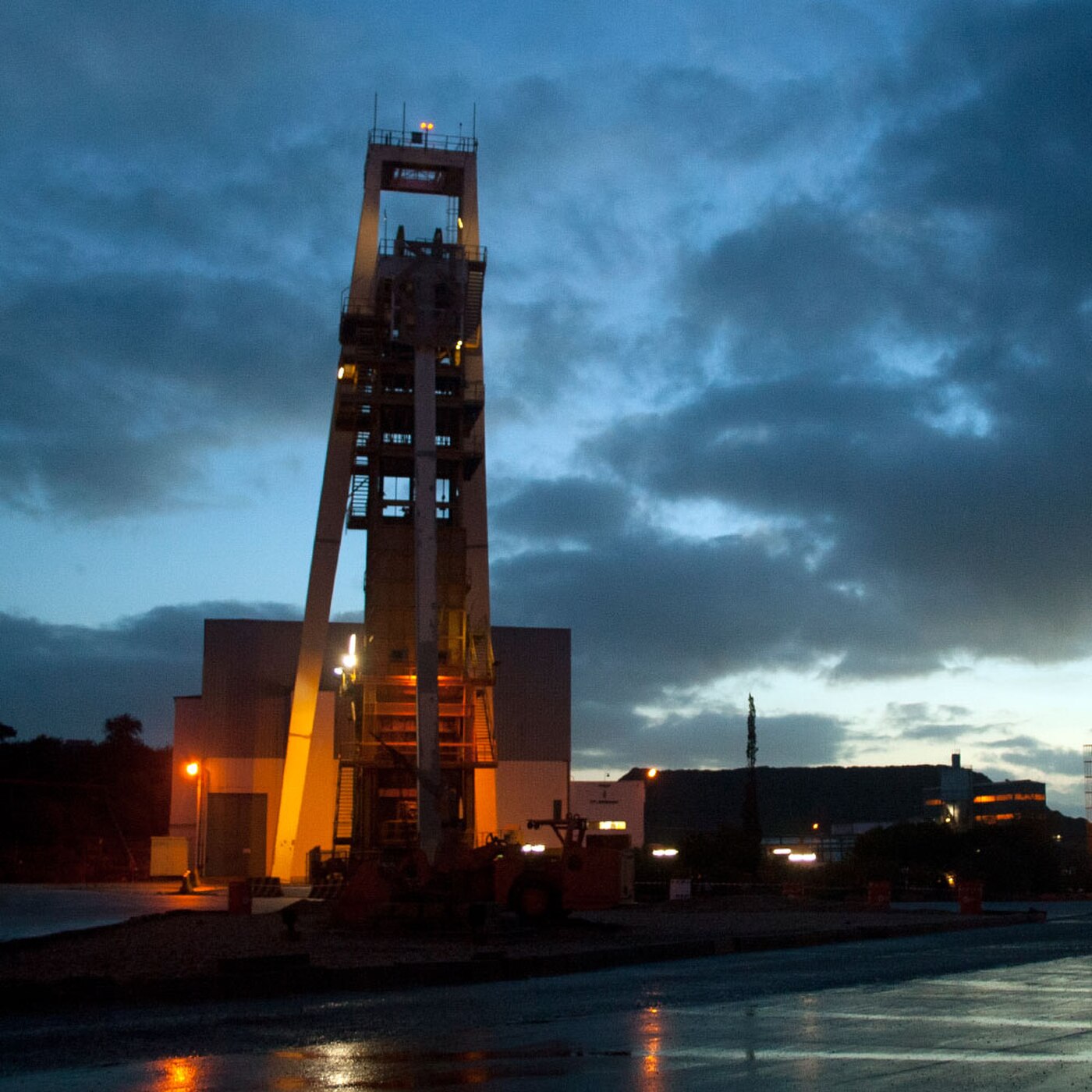
The Neves-Corvo mine, in the municipality of Castro Verde on the border with Almodôvar, is one of the largest copper and zinc mines in Europe, today owned by Boliden. For hundreds of families in the Almodôvar municipality, in Santa Clara-a-Nova and across Baixo Alentejo, the mine means livelihood, identity and the struggle of generations of miners.
History of the Mine
From hidden deposit to one of the largest mines in Europe
The Discovery (1970-1977)
The story of Neves-Corvo begins in 1970, when the Mining Development Service (Serviço de Fomento Mineiro) started geological prospecting in the area between the villages of Neves and Corvo, in the Iberian Pyrite Belt. A gravimetric survey of around 100 km2, directed by Rocha Gomes, identified promising anomalies. On 25 May 1977, drill hole no. 2 cut through 38 metres of pyrite bearing lead and copper at the Neves anomaly. The deposit was classified as one of the richest in the world in copper and tin, with reserves estimated at 230 million tonnes of pyrite.
Construction and Opening (1980-1992)
Somincor (Sociedade Mineira de Neves-Corvo, S.A.) was founded on 24 July 1980 as a partnership between the Portuguese State and Rio Tinto. After 8 years of construction, mining began in 1988, with copper production in 1989 and tin in 1990. In 1992 the 31 km railway branch linking the mine to Ourique was opened.
Owners
| 1980-2004 | Portuguese State + Rio Tinto |
| 2004-2006 | EuroZinc Mining |
| 2006-2024/25 | Lundin Mining (merger with EuroZinc) |
| Since 2024 | Boliden (sale announced in 2024, for 1.44 billion euros) |
Production
| Deposits | Neves, Corvo, Graça, Zambujal and Lombador |
| 2023 production | 108,812 tonnes of zinc; 33,823 tonnes of copper |
| Status | European Commission strategic mineral project (2025) |
- ◆Copper (6th largest mine in Europe)
- ◆Zinc (largest mine in Europe)
- ◆Silver and lead (by-products)
Struggles and Sacrifices
The story of the workers who gave their lives for the mine
The history of the mine is also the history of its workers' fight for decent conditions, safety and respect. More than 500 families from Almodôvar work at the mine, and many residents of Santa Clara-a-Nova make the daily journey to Neves-Corvo.
Workforce
| Direct workers | ~1,300 in-house employees |
| Contractors | ~1,300 full-time subcontracted workers |
| Indirect jobs | ~5,000 jobs induced in the regional economy |
| Note | The largest employer in the region |
A Dark Chronology
"Ten dead, seven seriously injured": that is the toll reported by the magazine Visão for accidents in the Baixo Alentejo mines (Neves-Corvo and Aljustrel combined) between 2010 and February 2024, with five fatal accidents at Neves-Corvo since 2015. Each name is a shattered family, a companion who never came home.
29 April 2005
Collision between a loader and a dumper truck. A worker was crushed. The first fatal accident since 1999.
26 June 2015
A subcontracted worker, aged 27, fell from an elevated platform at the zinc plant.
24 September 2020
A 44-year-old miner was buried by a rockfall while walking through an underground gallery.
30 March 2022
Filipe Venâncio, 43, from Almodôvar, died of sulphur gas inhalation after entering an area where an explosion had occurred on the previous shift.
30 September 2022
A 36-year-old subcontracted worker suffered cardiac arrest after being struck by a materials hoist 1,200 metres underground.
12 February 2024
A 42-year-old worker was buried when the gallery roof collapsed while he was operating rotary machinery.
Strikes and Union Struggle
Strikes from October to December
Three strikes between October and December, at a company that then employed around 2,000 workers. The strike of 6 to 11 November (5 days) brought extraction and production to a complete halt. Organised by STIM (the Mining Industry Workers' Union), led by Jacinto Anacleto. Demands: an end to the continuous underground shift regime, humane working hours, early retirement, career progression and an end to workplace harassment.
Escalation and dismissals
Four general supervisors were dismissed, allegedly for taking part in the strikes. The union called the dismissals "antidemocratic, inadmissible and unacceptable". The ACT (the Portuguese labour conditions authority) filed a complaint with the Public Prosecutor for violation of the right to strike. The case reached Parliament.
March strike
Organised by STIM, led by Albino Pereira. Demands: wage increases of 150 euros per worker, career progression, better allowances and renegotiation of the health insurance. Somincor offered only a 4.3% raise.
Strike against the new shift model (under Boliden)
Workers rejected by majority the 4x4 shift model proposed by Boliden Somincor. The union argued that the new model violated the 2019 agreement and sacrificed workers' health. Since the 2019 schedule was introduced, workplace accidents have increased, including four deaths. STIM sought an injunction from the courts.
"A lack of safety conditions. Ten-hour shifts and worker fatigue."
Impact on the Region
How the mine transformed Baixo Alentejo
- ◆More than 500 families from Almodôvar work at the mine
- ◆Workers from Santa Clara-a-Nova make the daily journey to Neves-Corvo
- ◆The mine is the main barrier against the depopulation of the interior
- ◆Castro Verde was declared "Portugal's mining capital" in 2022
- ◆The mine turned a purely agricultural economy into one with real vitality
The Derrama Question
A dispute between Castro Verde and Almodôvar over the derrama (the municipal tax on profits). Castro Verde receives the full amount because Somincor's registered office lies within its jurisdiction, yet significant galleries extend beneath Almodôvar territory. The mayor of Almodôvar has called the situation "unjust".
The Miners' Music
From the mines of Asturias to Baixo Alentejo
The musical tradition of the Alentejo miners is one of the region's deepest cultural expressions. Miners sang in the galleries, in the taverns, at gatherings. The cante is inseparable from mining identity.
The Miners' Hymn
According to tradition and the available sources, the Miners' Hymn sung in the Baixo Alentejo mines originates in the Asturian song "Nel Pozu María Luisa", also known as "Santa Bárbara bendita", born in Ciañu, in the municipality of Langreo (Asturias), in memory of a fatal accident at the Pozu María Luisa mine. The miners of Aljustrel adapted it into Portuguese (the original "compañera" became "companheiro") and the song spread through the mining communities of Baixo Alentejo. Local popular memory, however, also carries another version: that the melody is Chilean. That dispute over its origin has become part of the song's own story. At Neves-Corvo the tradition is alive: on the miners' vigil day a mass is held and, at the end, everyone sings the hymn.
The hymn is always sung in Portuguese. Its verses tell of four miners killed in the mines of São João, of a shirt soaked in a companion's blood, and end with an invocation of Saint Barbara, patron saint of miners.
Nas minas de São João
Lá, lá, lálá, lá, lá, lá
Morreram quatro mineiros
Vê lá, vê lá companheiro vê lá
Vê lá, como venho eu

A minha camisola
Lá, lá, lálá, lá, lá, lá
Está toda ensanguentada
Vê lá, vê lá companheiro vê lá
Do sangue dum companheiro

Eu trago a cabeça partida
Lá, lá, lálá, lá, lá, lá
Duma pedra da barrena
Vê lá, vê lá companheiro vê lá
Vê lá, como venho eu

Oh, Santa Bárbara, Santa Bárbara
Lá, lá, lálá, lá, lá, lá
Padroeira dos Mineiros
Vê lá, vê lá companheiro vê lá
Vê lá, como venho eu
Cantes Mineros: The Spanish Heritage
The "Cantes de las Minas" are a flamenco tradition born in the mining basins of Spain (Murcia, Almería, Huelva) in the 19th century, the fruit of migrations of Andalusian and Murcian workers. Derived from the fandango and the malagueña, these songs became the popular chronicle of their time: they tell of the work, the wages, the accidents, everyday life, immigration and exodus. Along the Iberian Pyrite Belt, which links the Spanish mines of Riotinto (Huelva) to the Portuguese mines of São Domingos, Aljustrel and Neves-Corvo, there was an intense cultural exchange. Spanish workers brought the fandango, the mining songs and the Andalusian traditions. Portuguese miners fused these influences with Cante Alentejano, creating a unique musical tradition.
Listen to the Miners' Cante
Miners' Choral Groups
Grupo Coral do Sindicato Mineiro de Aljustrel
One of the oldest choral groups in the Alentejo, founded in direct connection with the miners' union movement.
Grupo Coral da Liga dos Amigos da Mina de São Domingos
Formed in 1976 in Sacavém by former miners of São Domingos (a mine closed in 1968). More than 45 years on, it keeps the miners' cante tradition alive.
As Papoilas do Corvo
A women's vocal group from Castro Verde, tied to the Neves-Corvo mining community.
Castro Mineiro Festival
Celebrating mining identity
Created in 2022, the Castro Mineiro festival celebrates the "mining culture and identity built over the last four decades". It includes photographic exhibitions on the daily life of the mining communities, guided visits to the mine, music, gastronomy and conviviality.
- ◆The exhibition "Da minha janela vejo a mina" (From my window I see the mine)
- ◆Guided visits to the mine (Saturday mornings)
- ◆Choral groups from the mining communities
- ◆Regional gastronomy and local products