Traditions
What is sung, what is made by hand, what is celebrated and what is drunk in Santa Clara-a-Nova and the Almodôvar municipality. Traditions passed from generation to generation, still alive in Baixo Alentejo.
Cante Alentejano
UNESCO Intangible Cultural Heritage of Humanity
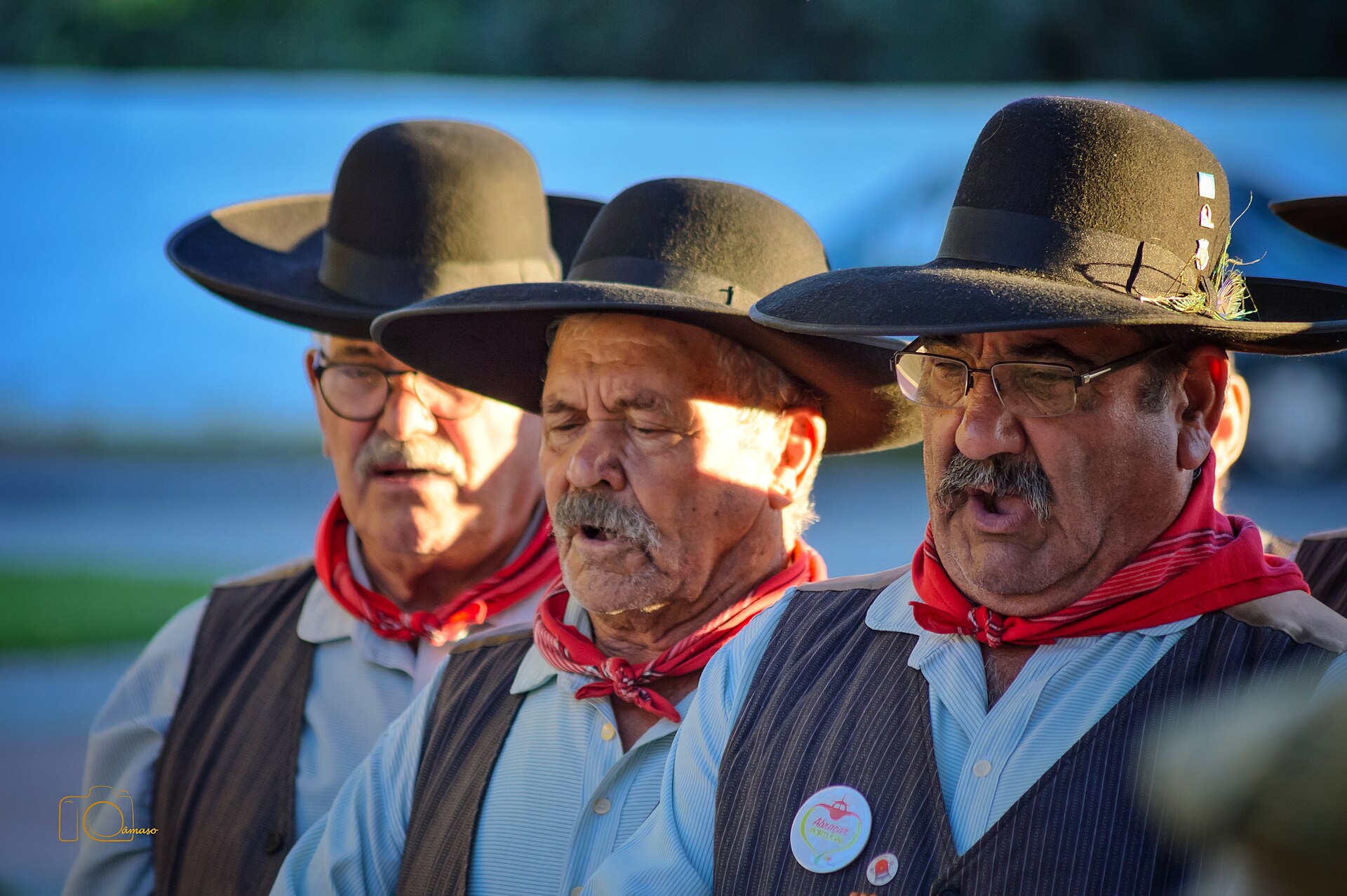
In 2014, UNESCO inscribed cante alentejano on the Representative List of the Intangible Cultural Heritage of Humanity. It is the Alentejo's greatest musical expression: two-part polyphonic singing, entirely unaccompanied, performed by amateur choirs of up to around 30 singers.
The structure is always the same: the "ponto" opens the song, the "alto" doubles the melody a third or a tenth above, with ornaments, and the choir answers in parallel thirds. The result is a dense, solemn sound that fills a room, a tavern or a village square.
The themes are those of rural life: work, love, religion, longing. Cante is passed between generations at choir rehearsals and is practised across the Alentejo and in communities of Alentejo migrants, especially around Lisbon.
Cante needs no stage and no instruments: just a group of voices and the memory of the songs. That is why it survived in the fields, the taverns and the festas, and why it is still alive today.
Crafts
The knowledge of the hands
The region's crafts were born of necessity: making the most of the wool, rush, wood and cloth at hand. Today they are a heritage still found in homes and at fairs.
Patchwork blankets (mantas de retalhos)
A centuries-old tradition of the Almodôvar municipality: blankets hand-woven on traditional looms, using local sheep's wool and geometric patterns. They are among the region's most representative crafts.
Rush chairs (cadeiras em bunho)
Traditional chairs with seats woven from bunho (rush), made by hand in the region.
Woodwork
Hand-worked wooden pieces, tied to the trades and tools of rural life.
Lace and embroidery
Delicate handmade textile work, one of the expressions of the region's domestic craftsmanship.
The Festive Calendar
The village and municipal year of celebrations
The festive calendar sets the rhythm of the year. The main celebration honours the patron saint on 12 August, a date that preserves the pre-1970 liturgical calendar.
Festa de Santa Clara
12 AugustThe feast of the village's patron saint, Saint Clare of Assisi. It is held on 12 August, the liturgical feast date used before the 1970 reform, which local tradition preserved.
Festa de Santo Amaro
15 JanuaryA highly traditional fair in the Almodôvar municipality, in the depths of the Alentejo winter.
São João (St John)
24 JuneA traditional popular celebration in the Almodôvar municipality.
Almodôvar Annual Fair
5 OctoberThe big annual fair of the municipal seat, about 15 km from the village.
Medronho
The municipality's traditional drink
The medronheiro (strawberry tree) is one of the characteristic trees of the hills surrounding the village. From its fruit, the medronho, picked during the October to November harvest season, a fruit brandy is distilled: aguardente de medronho.
Aguardente de medronho is promoted by the Almodôvar municipality as its traditional drink. Try a glass at the end of an Alentejo meal, or buy a bottle at the region's fairs and from local producers.